
Top AI Hiring Platforms for Scalable Recruiting in 2026
Compare Adway, Phenom, Beamery and Eightfold by hiring workflow, integration and evidence. Use a practical role-to-record test to evaluate fit.

AI hiring platforms support different parts of recruitment: attracting candidates, organising talent relationships, matching people to roles, and coordinating screening or interviews. For scalable recruiting, choose the workflow that is slowing your team down before comparing vendors. Adway focuses on social candidate attraction and application capture; Phenom, Beamery and Eightfold describe broader talent workflows. The right shortlist depends on your roles, existing systems and the evidence each vendor can demonstrate.
This guide is published by Adway. It compares the four platforms by their published product scope and offers a practical evaluation method. It is not an independent product test or a performance ranking. Product descriptions were checked on 30 October 2026; confirm the modules and configuration included in any proposal.
At a Glance
- Start with a specific bottleneck: too few relevant applicants, an underused candidate database, slow assessment, or a broken handoff between systems.
- Separate audience reach, submitted applications, reviewed candidates, interviews and hires. They are different stages, with different denominators.
- Evaluate Adway for social attraction and the application route; evaluate the other platforms against the CRM, matching, candidate experience or hiring workflows you need.
- Ask each vendor to demonstrate the same role, data inputs, human review and system handoff. A feature name or integration logo is only a starting point.
- Compare the complete operating cost and observable results. This guide does not promise a percentage improvement or a universal return on investment.
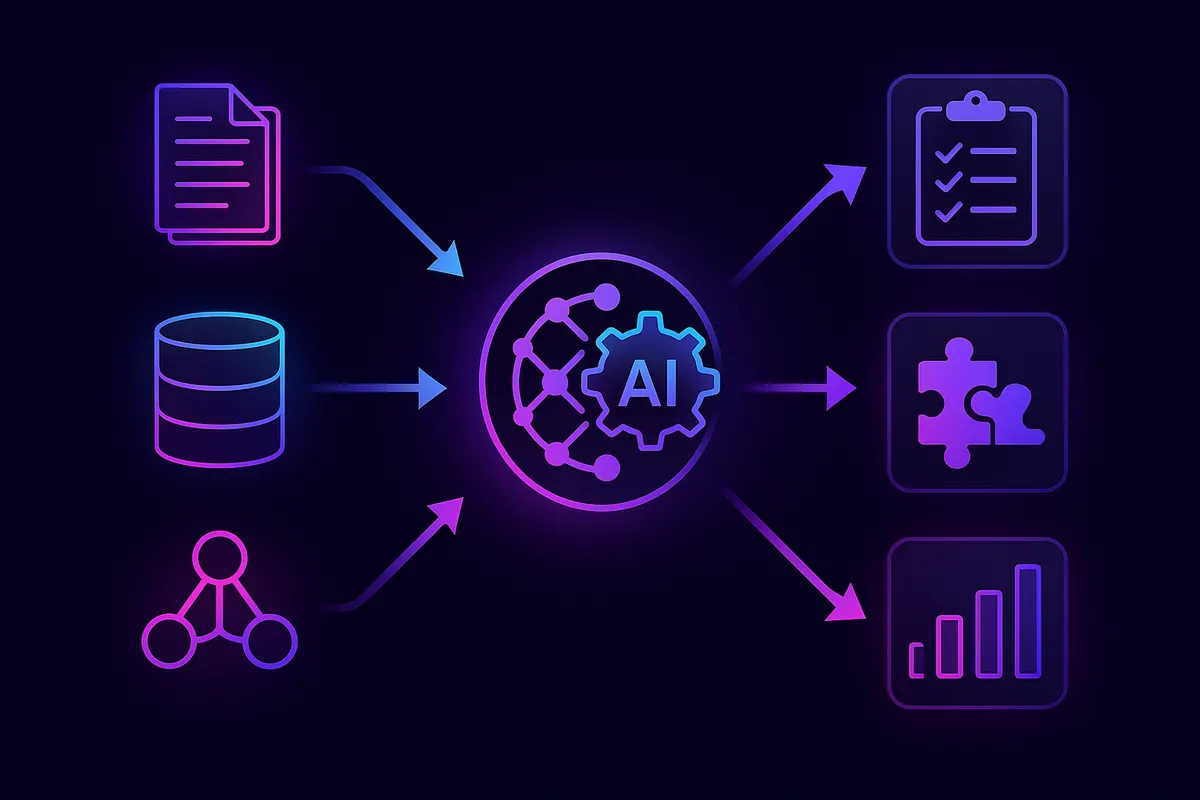
Illustrative workflow: inputs, recommendations and reporting vary by product. The diagram is not an architecture claim about any of the four vendors.
What Are AI Hiring Platforms?
“AI hiring platform” is a broad buying category. A product may help create recruitment content, retrieve candidate profiles, recommend matches, collect screening information or coordinate interviews. These tasks need different inputs and produce different outputs. An advertising audience is not a list of screened candidates, and a suggested match is not a hiring decision.
Map the task to the person who will use the output. A talent marketer may need approved campaigns and source reporting. A recruiter may need a searchable record, an explanation of a recommendation and a reliable next step. Your ATS may continue to hold the application and hiring status even when another product handles attraction or engagement.
Before opening a shortlist, complete this sentence: “For this role and location, we need to improve this stage, and we will verify the result in this system.” That creates a decision your team can test.
Where Can AI Help High-Volume Recruiting?
Scale creates repeated work, but repetition alone does not justify automating a hiring decision. Identify the task that consumes capacity and test whether the proposed workflow helps without losing information or candidate access.
| Recruitment task | Potential use | What to verify |
|---|---|---|
| Campaign preparation | Create or adapt recruitment content | Role facts, approval controls and the actual destinations |
| Candidate retrieval | Find potentially relevant existing profiles | Data permissions, freshness and why a profile was retrieved |
| Matching or screening assistance | Organise information for recruiter review | Job-related criteria, missing data and a way to challenge the output |
| Candidate communication | Coordinate messages or interview steps | Accessibility, an alternative contact route and a named owner for exceptions |
These are evaluation questions, not claims that every listed vendor supplies every capability. Faster processing is useful only if the receiving team can act on the output. Record both the work saved and the extra review, correction or integration work introduced.
Which Criteria Should Guide Your AI Hiring Platform Selection?
Start with the candidate journey, then the system boundary. Can a person understand the role, complete the intended step on a phone and receive a clear next action? Can the recruiter find the record without retyping it? Can an administrator see what happened when a transfer fails?
Use the same five questions in each demonstration:
- Inputs: Which job, profile or campaign data does this task require, and where does it come from?
- Controls: Which fields can a recruiter approve, correct or override? Who can change the criteria?
- Output: What is actually created: an audience, contact, application, recommendation or scheduled interview?
- Handoff: Which system receives it, with which fields, identifiers and status? What happens on a duplicate or failed transfer?
- Evidence: Which records show that the workflow worked, and which outcomes still require human review or follow-up?
Ask for a demonstration with incomplete information as well as a clean example. A candidate who leaves a field blank, a role that closes mid-campaign or a duplicate record often reveals more about operating fit than a polished feature tour.
Adway: Social Attraction and Application Capture
Adway is relevant when the bottleneck is getting roles in front of potential applicants and helping interested people take the application step. Its Always-On Job Ads page describes syncing open roles and producing social ads. Social Apply describes mobile application flows and configurable screening questions. Confirm the candidate journey for each channel and configuration; do not assume every placement uses the same native application form.
Adway’s ATS and CRM integrations page lists recruiting systems. Ask to see your specific connection, supported fields and failure handling. A published integration does not establish that every workflow, data field or two-way status update is available in your setup.
Core Capabilities
| Workflow to evaluate with Adway | Demonstration to request | Evidence to retain |
|---|---|---|
| Role to social campaign | Use one current requisition and review the generated creative | Job identifier, approved content, destination and campaign record |
| Candidate to application | Complete the selected route on a phone, including screening questions | Submitted record, question responses and the next-step message |
| Application to recruiting system | Follow the same test record into the agreed ATS or CRM | Field mapping, source information and transfer status |
| Campaign to reviewed outcome | Follow an application through the team’s review process | Recorded stage, reviewer decision and the limits of source attribution |
This is an acceptance checklist, not a claim that a demonstration has already passed. Use Adway’s performance and ROI material to frame questions, then verify the definitions and evidence in your own workflow.
Customer stories provide context, not a forecast. The PwC interview discusses simplifying the application journey and changing recruiting practices. The Nexer case study is another reference to review for its particular roles and operating conditions. Neither establishes what a different employer will achieve.
How Do Other Leading Platforms Stack Up?
These products span different parts of talent acquisition. The descriptions below reflect vendor documentation; the suggested tests are our evaluation recommendations. Ask about purchased modules, implementation work and ownership of the data before treating any capability as part of your contract.
Phenom
Phenom Talent CRM describes candidate records, dynamic segments, matching and engagement campaigns. Its product portfolio also includes career sites, screening and interview scheduling.
Consider Phenom when the decision involves candidate relationships and connected candidate experiences across several stages. Ask the vendor to show one record moving from a segment into an application and interview workflow, including which modules are required. Do not infer its advertising scope from a CRM description; have the vendor demonstrate any channel or media-buying requirement separately.
Beamery
Beamery’s recruiter solutions describe a talent database, sourcing and matching, talent marketing, candidate experience and reporting. Its current platform positioning also covers workforce and skills intelligence.
Consider Beamery when candidate data, skills and relationship management are central to the problem. Ask it to explain where a recommendation came from, how stale or incomplete records are handled and how recruiter corrections affect the workflow. Request the exact data exchange for your recruiting system rather than assuming an integration logo covers the complete process.
Eightfold
Eightfold describes talent intelligence and agents across talent acquisition and talent management. Its product portfolio includes hiring and workforce applications.
Consider Eightfold when matching and related talent workflows are central to the evaluation. Ask the vendor to trace a recommendation back to its inputs, demonstrate recruiter review and explain the boundary between assistance and a decision. If interview or screening products are in scope, evaluate those modules explicitly rather than treating the whole portfolio as a single feature.
Comparison Summary
| Platform | Published scope relevant to this guide | Starting point for your evaluation | Do not assume |
|---|---|---|---|
| Adway | Social attraction, application capture and recruiting-system connections | One role from approved campaign through submitted application to the agreed system | That reach means qualification, or every channel and connector behaves identically |
| Phenom | Talent CRM, candidate experience and connected hiring workflows | One candidate record across the modules you plan to buy | That a CRM description proves every advertising capability |
| Beamery | Talent data, skills, sourcing and matching, and candidate engagement | One profile recommendation and its handoff to your recruiting workflow | That complete, current data or every integration field is available by default |
| Eightfold | Talent intelligence and applications across hiring and workforce workflows | One recommendation with its inputs, review step and resulting action | That an AI recommendation is a verified fact or a final hiring decision |
The order preserves the guide’s existing vendor set. It does not indicate a scored ranking. For the narrower decision about media buying and recruitment marketing platforms, use the programmatic recruitment marketing comparison.
Run a Role-to-Record Acceptance Test
The following is an illustrative buyer exercise, not a customer result or a benchmark. Choose one recurring role, one location and the recruiting system your team will actually use. Write down the required qualifications and who owns each stage before the demonstration.
First, test the task that matters. If awareness is the problem, inspect the campaign and application route. If candidate retrieval is the problem, use an agreed set of permitted sample records. A tool should not receive credit for solving a different task simply because that demonstration looks better.
Next, follow one record. Use test data approved for the demonstration. Record the initial input, the output, any explanation, the human decision and the final system record. Ask the vendor to repeat the flow with a missing field or duplicate. Keep screenshots or an export only where your organisation permits it.
Then test the handoff. Confirm which system owns the record, which team follows up and how a failed transfer is surfaced. Record any manual steps. If a required handoff cannot be demonstrated, mark it “not verified” and resolve it before relying on it.
Finally, agree a pilot scorecard. Track submitted applications, reviewed applications, candidates meeting the agreed criteria, interviews and hires separately. Include recruiter time and implementation work. Keep the role, location, observation window and definitions visible when comparing results. A small pilot can reveal a broken process; it usually cannot establish a reliable long-term improvement in quality of hire.
How Much Do AI Hiring Platforms Cost, and What ROI Can You Expect?
Request a quote for the complete workflow. Separate software fees, implementation, connectors, advertising spend, operating support and any usage or overage charges. Ask what changes when you add roles, users, locations or modules. This guide does not publish a current price range for any of the four vendors.
Build the business case from your own costs and observed outcomes. Cost per submitted application and cost per reviewed, qualified application answer different questions. Define qualification before reviewing candidates and record how many applications have actually been reviewed. Treat time released for other work as a capacity benefit until a cash saving is demonstrated.
Use the AI recruiting ROI guide for a structured ledger. Adway’s performance reporting material and the Nexer customer story can inform questions about measurement, but they are not substitutes for a comparable baseline or your own cost records.
Implementation Pitfalls & Emerging AI Hiring Regulations
AI assistance does not make a workflow automatically accurate, fair or compliant. The UK Information Commissioner’s recruitment review describes privacy and information-rights risks associated with AI recruitment tools. The European Commission’s AI Act guidance explains that obligations depend on the system and its use. Consult current guidance and your legal or privacy team for the jurisdictions and deployment in question.
Before a pilot, agree who can access the data, how long it is retained, how corrections and deletion requests are handled, and how candidates can reach a person. Ask for documentation relevant to the actual module and use case. A general certification, an AI label or a claim of “bias-free” output does not answer those questions.
Test accessibility and an alternative route for candidates who cannot use the proposed flow. Give recruiters a way to review uncertain outputs and record exceptions. Assign an owner for failures after launch, including closed roles, duplicate records and stale candidate information.
Bringing It All Together
Choose the task, demonstrate the handoff and agree the evidence before comparing promises. Adway is one option for social attraction and application capture; the other vendors describe different combinations of talent data and hiring workflows. Your decision should follow the process your team needs to operate.
Explore the Social Apply journey, inspect the available integrations, or browse Adway’s resource hub for more context. Book a demo with one role and one system in mind so the next step can be a practical demonstration.
For a fixed hiring window, use the seasonal recruitment advertising campaign plan to coordinate launch, review capacity and closure.
Sources
Product descriptions are based on Adway’s product pages, Phenom’s Talent CRM and product portfolio, Beamery’s recruiter solutions and platform overview, and Eightfold’s platform and product portfolio, checked on 30 October 2026. The comparison is a scope review, not an independent test. Governance references point to current official guidance; legal applicability needs review for the intended use.
For additional context, browse Adway insights and the Adway resource library. Historical numerical benchmarks, review ratings and recognition-year claims have not been used as evidence of comparative performance in this refresh.
Further reading
Frequently asked questions
What are AI hiring platforms?
AI hiring platforms use AI to assist tasks such as attraction, candidate retrieval, matching, screening or interview coordination. Their scope varies. Compare the specific workflow, required data, human controls and system handoff rather than assuming every product covers the entire hiring process.
Why can AI help with high-volume recruiting?
AI can assist repetitive work and organise information for recruiters. Whether it helps depends on the task, data and operating process. Test the proposed workflow and measure review effort, candidate experience and downstream outcomes; faster processing alone does not establish better hiring.
What criteria should guide AI hiring platform selection?
Start with the hiring bottleneck, then evaluate inputs, controls, output, integration and evidence. Demonstrate the workflow with your role and system, including missing data and failed transfers. Confirm the modules, total cost, accessibility and governance requirements before relying on the result.
How does Adway fit into an AI hiring stack?
Adway focuses on social candidate attraction and application capture, with connections to recruiting systems. Evaluate the route from an open role to a campaign, then from a submitted application to the agreed ATS or CRM. Verify channel-specific flows and the fields supported by your connection.
What results should a team expect from Adway?
Set expectations through an agreed pilot and comparable baseline. Measure submitted applications, reviewed qualification, recruiter effort and later hiring outcomes separately. Customer stories illustrate specific situations; they do not guarantee a particular improvement or return for another employer.