
Best Social Recruiting Platform for Talent Acquisition Teams in 2026
Evaluate social recruiting platforms for enterprise teams and staffing agencies using a practical campaign, application and ATS handoff checklist.

Choose a social recruiting platform by the work your team needs to complete: paid candidate attraction, social publishing, direct sourcing or staffing operations. These functions can sit in different tools. Adway fits social attraction and application workflows; evaluate the campaign controls and recruiting-system handoff before deciding whether it belongs in your stack.
If your shortlist spans several kinds of tools, compare their roles in the social media recruiting tools guide, then use the enterprise or staffing checks below to test operational fit.
Key facts
- Match the platform to the specific job: paid social attraction, publishing, direct sourcing and staffing operations rarely sit in one tool.
- Ask every vendor to demonstrate campaign approval, application flow and ATS handoff rather than describe it in a sales deck.
- Enterprise buyers need central brand approval, local ownership and reporting handoff tested explicitly; staffing buyers need client-brand permission, requisition identifiers and duplicate handling tested explicitly.
- Direct profile sourcing and agency ATS/CRM operations solve different problems than paid social attraction, and none of the tools in this comparison substitutes for the others.
- Treat cost, quality and speed as one combined measure: a faster or cheaper funnel that weakens hire quality is not an improvement.
Why Do Talent Acquisition Teams Need a Social Recruiting Platform in 2026?
Social recruiting can include paid candidate attraction and social publishing. For related Adway product information, see the EB-flash creative studio. Evaluate the channels and workflow included in the proposed configuration.
Traditional job boards reach people who are already searching. Social recruiting technology puts a role or an employer brand in front of people who are not searching yet, which is a different job: attraction rather than conversion. Whether that gap matters to your team depends on how much of your pipeline already comes from active searchers versus how much you need from people who have not started looking.

What Evaluation Criteria Separate Good from Great Social Recruiting Platforms?
Treat platform evaluation as a question of workflow fit, not a feature checklist. Ask each vendor to demonstrate, not just describe, how it handles:
- Quality-of-hire visibility: can you track who the platform sources through to interview, hire and retention, or does reporting stop at applications?
- Time-to-fill and cost scope: does a reported cost figure include media, platform fees and services, or only one of the three?
- ATS/CRM integration depth: does a connector map every field you need, or only a subset?
- Targeting and automation claims: what data trains the targeting, and who reviews it?
- Compliance and governance: what evidence can the vendor produce on data use, review rights and error correction, beyond a compliance label?
These criteria apply before any platform-specific comparison. The enterprise and staffing subsections below add the operational detail that a generic feature list skips.
Quality of Hire
Quality of hire asks whether new hires perform and stay, not just whether a role gets filled. Ask a vendor which pre-hire and post-hire signals its reporting actually connects: assessment scores, manager ratings at a fixed interval, or retention past a defined period. A platform that stops reporting at the application stage cannot demonstrate quality of hire on its own; it can only demonstrate volume.
Speed and Cost to Hire
Speed and cost matter only alongside the quality measure above; a faster, cheaper funnel that fills roles with weaker hires is not an improvement. Ask what a platform’s time-to-hire and cost-per-application figures include: does cost cover media only, or media plus platform fees and services? Does time-to-hire start at requisition or at first candidate contact? Mobile application design affects completion rates meaningfully, so ask to see a vendor’s own completion data for mobile versus desktop rather than taking a general industry figure at face value.
Enterprise evaluation criteria
Enterprise teams typically run social recruiting across many business units, brands or regions at once. Verify:
- Central brand approval: who signs off on creative and messaging before it runs, and how is that approval recorded?
- Local role and location ownership: can a regional or business-unit recruiter manage their own roles without central bottlenecks?
- Permitted access: what access tiers exist, and can access be scoped by business unit, region or role type?
- Job closure handling: does the platform stop serving ads automatically when a role closes, or does that require manual action?
- Reporting handoff: can a regional team pull its own reporting, or does every report route through a central administrator?
These are buyer requirements to verify against a specific vendor’s configuration, not features any platform in this comparison is being asserted to provide by default.
Staffing evaluation criteria
Staffing and recruitment agencies run a different operation: many clients, many requisitions, and candidates who may apply to more than one client’s roles. Verify:
- Client-brand permission: can a campaign run under the client’s brand rather than the agency’s, with the client’s sign-off on record?
- Requisition and client identifiers: does every application carry a client and requisition identifier, or does it land in one undifferentiated pool?
- Duplicate candidate handling: what happens when the same candidate applies to roles at two different clients, or twice to the same role?
- Agency ownership of the record: who owns the candidate record if the agency changes platforms, the client relationship or both?
- Redeployment: can a screened candidate be routed to a different open role without re-entering their information?
As with the enterprise list above, these are requirements to test in a proposed configuration, not claims about what any specific platform already does.
Illustrative acceptance test: one client, two locations
The scenario below is illustrative: a worksheet a staffing team could run with any vendor, not a record from an actual client or an automated product feature.
A staffing team brings one approved vacancy with client-brand permission, a defined set of application questions, a named ATS destination and a closure rule for when the role fills. Ask the vendor to demonstrate each of the following in front of you, rather than describe it:
- Draft approval: the client, not just the agency, can review and approve creative before it runs.
- Wrong-client routing: an application intended for client A does not land in client B’s queue when both run similar roles.
- Duplicate application handling: the same candidate applying twice, to the same role or a second client’s role, is flagged rather than silently duplicated.
- Closed-vacancy behaviour: the campaign stops serving and the application form closes when the role is marked filled.
- Missing source field: an application missing the client or requisition identifier is flagged for review rather than accepted silently.
Record each item as pass, needs configuration, or not demonstrated. Leave a vendor’s cell blank rather than assuming a pass if the vendor cannot show it live: an undemonstrated requirement is not evidence that the capability exists, only that it was not shown.
Platform Showdown: Adway vs. Other Market Options
The table below names each platform’s documented role as the vendor itself describes it, alongside the proof worth asking for before taking that description at face value. The order below is a presentation order, not a ranking: none of the three has been tested head-to-head for this comparison.
| Platform | Documented role | Buyer proof to request |
|---|---|---|
| Adway | Employer Brand Activation and social attraction | Campaign approval, application flow and ATS handoff |
| Recruitics | Recruitment media attraction and conversion | Included social channels, services and attribution |
| CareerArc HireSocial | Social publishing and recruitment content | Publishing permissions, profile coverage and reporting |
Where Adway fits
Adway is recognised as a Core Leader in the 2026 Fosway 9-Grid for Talent Acquisition, in Talent Attraction and Engagement. That recognition describes analyst positioning, not a guarantee of fit for any specific team.
Adway’s documented role covers three stages. Always-On Job Ads run employer-brand and job-driven content across the social channels a team configures, continuously rather than campaign by campaign. Apply captures the resulting application through registration, screening questions and Smart ScoreCard, supporting both social and career-site entry points. Integrations then syncs that screened application into whichever ATS or CRM a team already runs; the integrations directory names the systems covered, which is worth checking against your own stack rather than assuming universal coverage.
This is attraction and application capture, not direct candidate sourcing and not agency operations. A recruiter searching existing profiles directly needs a sourcing tool; LinkedIn Recruiter and hireEZ serve that function, and neither is a substitute for paid social attraction, or the reverse. An agency running placements across many clients needs a staffing ATS/CRM; Bullhorn documents ATS and CRM workflows for staffing, including search, matching, automation and reporting, and the capabilities included vary by package, so ask which ones apply before assuming candidate acquisition sits outside its offering entirely. None of these three replaces what the other two do.
For further reading on how this attraction-and-capture role plays out at a client, see the Nexer Recruit case study, as an account of rollout rather than proof of a specific number for any other team. Learn more about Adway’s social recruiting technology.
Recruitics attraction workflows
Recruitics documents attraction across recruitment media, including social channels, inside a platform that also covers conversion and managed services. It is not accurately described as job-board-only, and it is not accurately described as unable to run employer-brand campaigns; ask the vendor which social channels, services and attribution model are included in your specific package, since recruitment-media platforms commonly scope these differently across tiers.
CareerArc HireSocial
CareerArc’s HireSocial documents job-driven social content, publishing controls across employee and corporate channels, and performance reporting. Its core documented strength is publishing and advocacy rather than a requirement for paid media, though that distinction describes an emphasis, not a claim that paid options are absent from CareerArc’s broader offering. Ask specifically which reporting metrics are included and whether the plan you are evaluating covers paid distribution, organic publishing, or both.
How Do You Prove ROI from Social Recruiting Platforms?
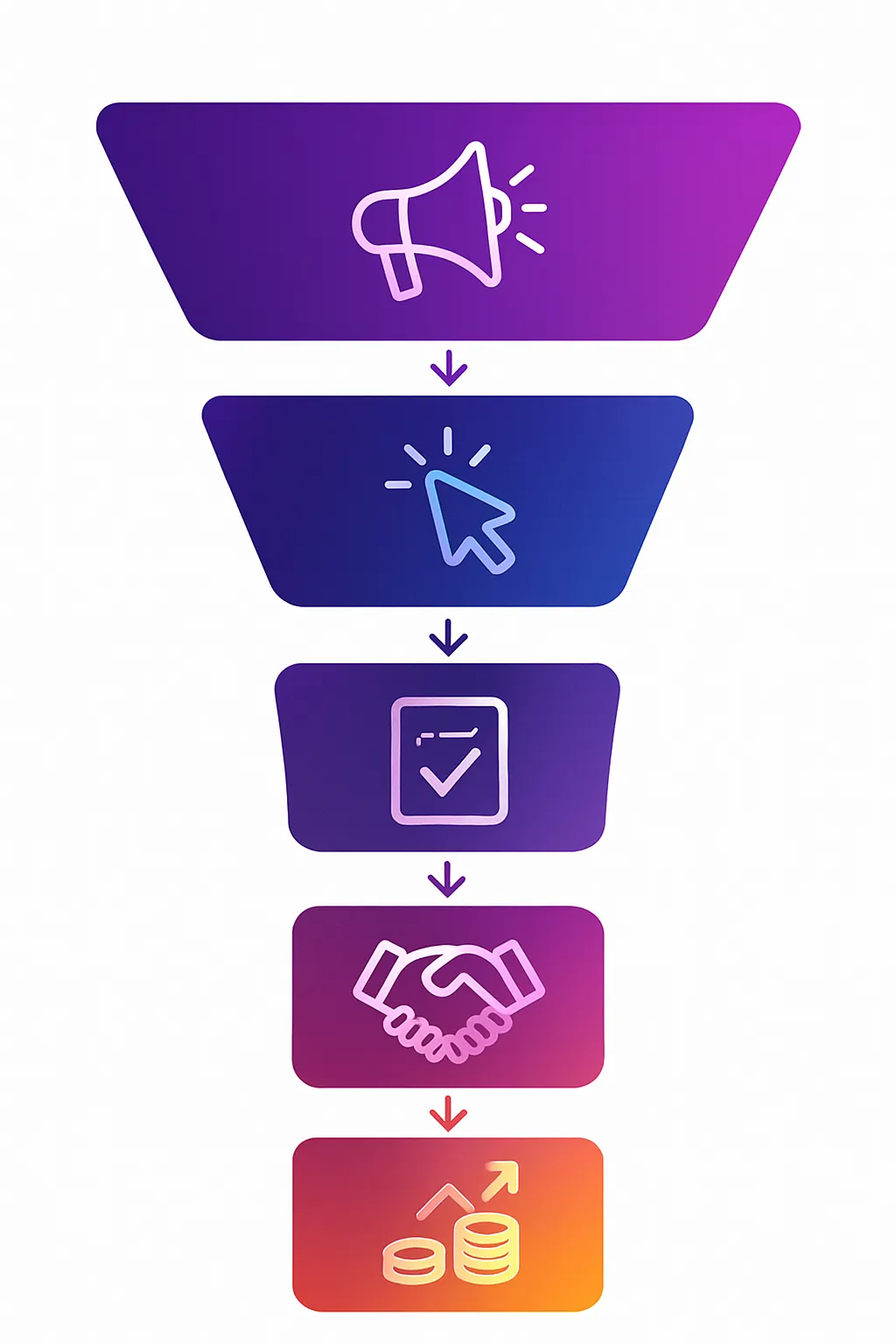
Proving ROI means connecting the funnel stages in the table below to a specific, fully scoped cost, not counting applications or impressions alone.
For further reading on an application journey, see the PwC Sweden case study. Use your own observed application starts and submitted applications to evaluate completion for a defined cohort.
| Measure | Definition | Evidence to retain |
|---|---|---|
| Application completion | Submitted applications divided by application starts | Matching journey and cohort |
| Qualified share | Qualified applications divided by reviewed applications | Criteria and pending reviews reported separately |
| Cost per qualified application | Fully allocated recruitment-marketing cost divided by qualified applications | Media, platform, services and operations scope |
| Hiring outcome | Recorded interview, hire and post-hire outcomes | Source linkage, review period and missing-data rate |
For category-level context alongside these four measures, Adway publishes recruitment-marketing performance and ROI data; treat it as a separate, aggregate reference rather than a prediction for your own funnel.
Use the social recruiting channel comparison worksheet to apply these measures to a paid social and job-board test with consistent costs and review dates.
What Responsible AI and Compliance Rules Should Recruiters Know?
AI-assisted recruiting tools raise real governance questions, and a vendor’s compliance label is a starting point for due diligence, not a substitute for it. Ask each vendor, in writing:
- Data use: what candidate data trains or informs the targeting and screening models, and for how long is it retained?
- Review rights: can a candidate or a recruiter see why a system produced a particular score or ranking?
- Access: who inside your organisation, and inside the vendor’s, can see or export candidate data?
- Error correction: what is the process when a candidate or recruiter disputes a result, and how quickly is it resolved?
- Responsibility: who is accountable if a screening or targeting decision produces a complaint, the vendor or your own team?
These are evidence requests, not a checklist a vendor can satisfy by stating that its system is compliant. Ask for the underlying documentation, not the summary claim.
Implementation Checklist: Integrating With Your ATS & Tech Stack
Before signing, confirm the following with whichever platform you choose:
- Source identifiers: does every application arrive tagged with a source and, for agencies, a client and requisition identifier?
- Required fields: which fields does your ATS require to accept a record, and does the integration map every one of them, or only a subset?
- Duplicate handling: what happens when the same person applies twice, through the same channel or a different one; is it flagged, merged, or silently duplicated?
- Errors and retries: when a sync fails, does it retry automatically, and is a failed sync visible to someone, or does it fail silently?
- Account ownership: who administers the integration after launch, your team or the vendor’s, and what happens to that access if either party changes?
- A test application: run one real test application through the full path, from ad or post through to the ATS record, before launch, not after.
Book a demo to walk through a role, its application journey and the handoff into your recruiting system.
Key Takeaways for 2026 Hiring Success
Choosing a social recruiting platform is a workflow decision before it is a vendor decision. Start from the specific gap, paid attraction, publishing, direct sourcing or staffing operations, and test each finalist against your own enterprise or staffing requirements rather than a generic feature list. Ask vendors to demonstrate rather than describe the items in the illustrative acceptance test above, and keep cost, quality and speed measures together rather than reporting any one of them alone.
The platforms compared here document different roles. Match the role to the gap you actually have, and verify the rest.
For a country-by-country acceptance sheet, use the European recruitment advertising vendor checklist.
Sources
- EB-flash creative studio
- Adway performance and ROI data
- Adway, Always-On Job Ads, Apply and Integrations product pages; checked 21 October 2026.
- Recruitics, Attract platform page; checked 21 October 2026.
- CareerArc, HireSocial features page; checked 21 October 2026.
- Bullhorn, Applicant Tracking and CRM product page; checked 21 October 2026.
Vendor and product capability descriptions above are supplier documentation, checked against each vendor’s own product pages, not independently tested outcomes.
Frequently asked questions
Which social recruiting platform fits an enterprise team?
Choose against the required acquisition, publishing and hiring workflow. Test permissions, brand approval, local operations and data handoff rather than assuming one product covers every function.
What should staffing agencies verify?
Verify client and job identifiers, brand permissions, candidate ownership, duplicate handling and reporting by assignment. Ask the vendor to demonstrate each requirement in the proposed configuration.
Does Adway replace an agency ATS or CRM?
No. Evaluate Adway for social attraction and application capture alongside the system used for clients, placements and candidate relationships.
Can a vendor promise bias-free recruiting?
Do not treat an automation label as proof of fairness. Request evidence about data, evaluation, human review and correction procedures for the intended workflow.
How should a social recruiting pilot be judged?
Use a defined role cohort, clear qualification criteria, complete cost scope and observed application-to-hiring stages. A higher application count alone does not prove better hiring.