
Employer Branding Agency or Activation Platform: Which Should You Choose?
Should you hire an employer branding agency or use an activation platform? The honest answer: they solve different halves of the same problem. What each does, when you need which, and why the strongest setups combine both.
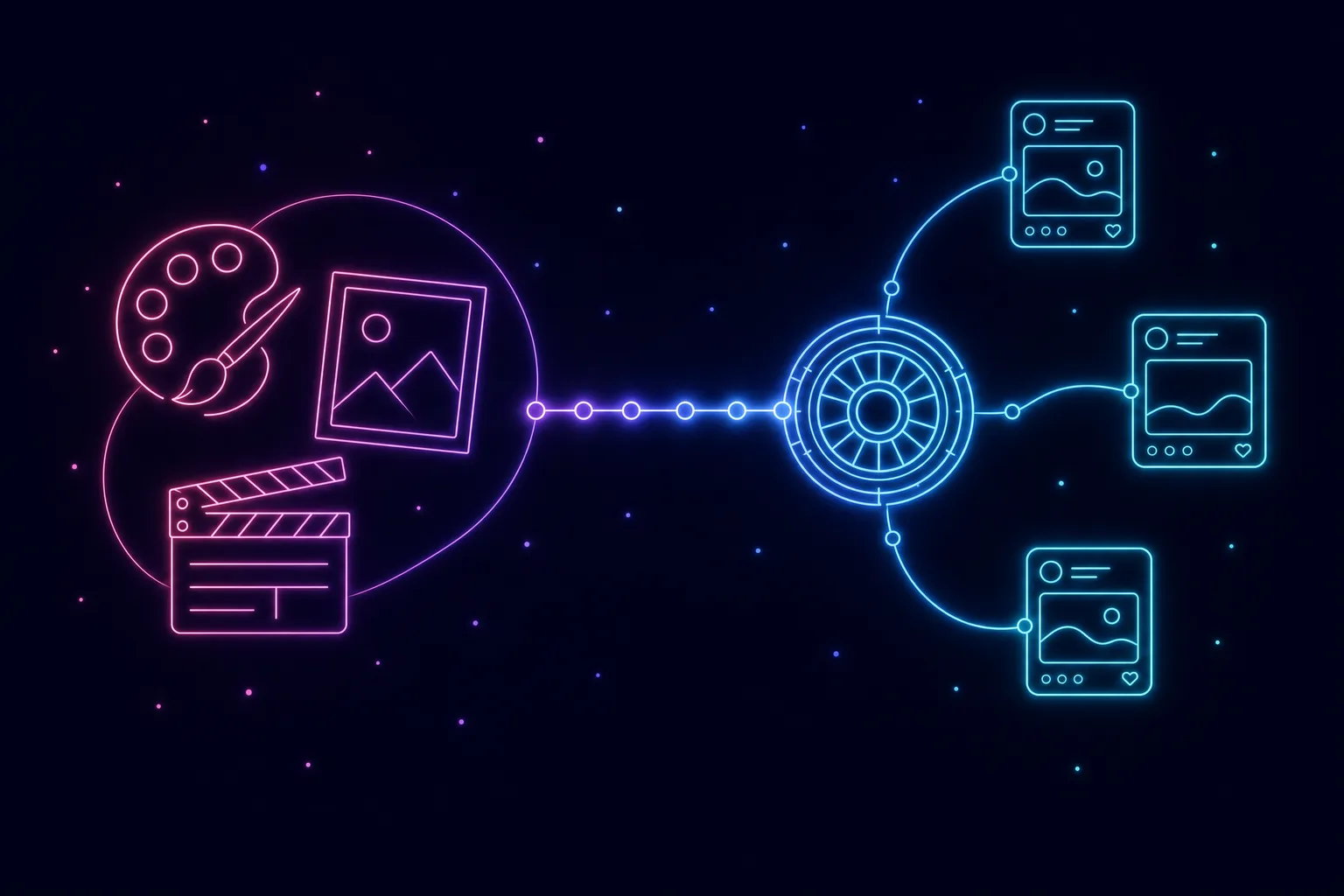
Should you hire an employer branding agency or use an activation platform? The honest answer is that the question contains a false choice. An agency creates the brand: the research, the EVP, the creative that makes your company worth noticing. An activation platform distributes it: the always-on machinery that puts that brand in front of candidates continuously, converts their interest into applications, and measures what comes back. Most companies asking this question have a gap in one half, and buying the other half will not fill it.
This post gives you the honest division of labour, the diagnostic for which half you are missing, and why the strongest setups run both together.
Key facts
- Employer branding agencies deliver project-based brand work: research, EVP development, creative toolkits, career-site content and campaign creative. The engagement ends; hiring does not.
- Activation platforms deliver continuous distribution: Adway runs every open role as an employer-brand ad across Meta, LinkedIn, TikTok, Snapchat and YouTube automatically, with one-click in-feed applications synced to 30+ ATS/CRM systems.
- The two are complements, not substitutes. Adway partners with employer branding agencies and maintains a free global directory of employer branding agencies, because the brand half of the work matters as much as the distribution half.
- Adway has been recognised as a Fosway 9-Grid Core Leader in Talent Acquisition for 5 consecutive years.
What does an employer branding agency do?
Agencies own the creative and strategic half: employer brand research and perception audits, EVP development and articulation, creative concepts, messaging frameworks, photography and film, career-site content, and campaign creative for launches and hiring pushes. Good agencies do this with craft that in-house teams and platforms rarely match, and when your employer brand is undefined, inconsistent or stale, this work is the prerequisite for everything else. No distribution machinery can activate a brand that does not exist.
The structural limit is the engagement model. Agency work is project-based: a brand refresh, a campaign, a toolkit. The project ends, the retainer winds down, and the assets land in a shared drive. Meanwhile hiring continues every week, and the feeds where candidates spend their time do not pause because the campaign did.
What does an employer brand activation platform do?
The platform half answers a different question: not “what is our employer brand?” but “how do candidates actually encounter it, continuously, at scale?” What is employer brand activation covers the category in depth; mechanically, Adway’s version has four parts. Always-On Job Ads turn every open role into social-native employer-brand advertising, automatically and continuously. EB-flash generates short-form EVP content from the career site in minutes. Social Apply converts interest in-feed, with Smart Profile and Smart Scorecard screening every applicant before the ATS. And Social Talent Pools compound every impression into a scored candidate audience you own, activated on demand with Boost.
The outcomes are the platform’s proof: OnePartnerGroup scaled social recruiting from 7% to 100% of its roles and reached 23× ROI; Strukton Rail doubled relevant applicants while cutting cost-per-hire by 33%.
The structural limit runs the other way: a platform distributes what exists. If the EVP is weak or the creative assets are thin, activation amplifies a whisper. That is the half an agency fixes.
Which one are you actually missing?
A short diagnostic, honestly applied:
- Your employer brand is undefined, dated, or inconsistent across markets → agency first. Distribution machinery cannot rescue a brand that has not been built. The agency directory is a free place to start that search.
- You invested in EVP and creative, and candidates never see it → activation platform. This is the distribution gap: beautiful brand assets sitting idle on a career site that passive candidates never visit. It is the most common state we see, and the one employer brand activation exists to fix.
- Applications spike during campaigns and vanish between them → activation platform. The brand works; the always-on layer is missing.
- Both halves feel weak → agency and platform together, sequenced: brand work first or in parallel, activation switched on as soon as there are assets to activate.
A budgeting note that follows from the diagnostic: agency work is a project cost that produces assets, while activation is an operating cost that produces applications. Treating them as competitors for the same budget line is how companies end up with a beautiful brand nobody sees, or always-on distribution of creative nobody remembers. They are different lines because they buy different things.
Why the strongest setups run both
The agency-platform combination is not a compromise; it is the operating model the category is moving toward. The agency owns strategy, EVP and creative craft. The platform gives that creative always-on, measurable distribution: every role advertised continuously, every impression compounding into an owned audience, every outcome tracked to applications and hires rather than impressions. The agency’s work stops being a launch and becomes a system.
Agencies are not the only source of the creative half, either. Creator- and employee-generated content has become a credible third voice in employer branding, and platforms such as Flockity specialise in it, pairing employers with creators and employee advocates whose authentic content then benefits from the same activation machinery.
This is also why Adway works with employer branding agencies as partners rather than competing with them: agencies bring the brand; the platform keeps it in front of the candidates who are not actively looking. For how the platform side compares vendor-by-vendor, the employer brand activation platform comparison maps that field.
And if you are the agency?
Half the readers of this question sit on the other side of the table, so it deserves a straight answer too. For employer branding agencies, activation platforms are not the competition; they are the retainer argument. A brand project that ends at handover competes on the next project; a brand project wired into always-on distribution produces monthly reach, application and quality-of-hire numbers with the agency’s creative at the centre of them. That turns a launch into a measurable, renewable programme, which is why Adway built a partner motion for employer branding agencies rather than a pitch against them: the agency keeps the strategy and craft, the platform supplies the machinery and the measurement, and the client stops asking what happened after the campaign ended.
Great employer brands are built by people and kept alive by machinery. Hire the people, run the machinery.
Sources
Frequently asked questions
Should you hire an employer branding agency or use an activation platform?
They solve different halves of the problem, so the question is really about where your gap is. An employer branding agency creates the brand: research, EVP development, creative, campaigns and content. An activation platform distributes it: turning the EVP, career site and hiring stories into always-on, social-native advertising that reaches candidates continuously. If your employer brand is undefined or stale, start with an agency. If you have strong brand assets that candidates never see, you have a distribution gap, and that is what an activation platform like Adway fixes. The strongest setups combine both.
What does an employer branding agency actually deliver?
Typically project-based work: employer brand research and audits, EVP development, creative concepts and toolkits, career-site content, photography and film, campaign creative and launch support. The deliverable is the brand itself and the assets that express it. What an agency engagement usually does not include is the always-on media machinery that keeps those assets in front of passive candidates every week after the project ends.
What does an employer brand activation platform do?
It turns existing employer-brand assets into continuous, automated distribution. Adway, for example, runs every open role as an employer-brand ad across Meta, LinkedIn, TikTok, Snapchat and YouTube automatically, converts interest with one-click in-feed applications synced to 30+ ATS/CRM systems, and compounds reach into owned Social Talent Pools. The platform does not replace the brand work: it is the machinery that stops the brand work from sitting idle.
Can an employer branding agency and an activation platform work together?
That is the strongest setup, and it is increasingly how agencies themselves deliver: the agency owns strategy, EVP and creative; the platform gives that creative always-on distribution and measurable hiring outcomes. Adway partners with employer branding agencies for exactly this reason, and maintains a free global directory of employer branding agencies for companies looking for the strategy-and-creative half.
When is an agency alone not enough?
When the campaign ends. Agency campaigns launch with energy and then stop, while hiring continues every week. If applications spike during campaign months and vanish between them, the brand is fine but the distribution is missing. Continuous, automated distribution is what carries an employer brand between campaigns, and it is the half a project-based engagement is not designed to provide.